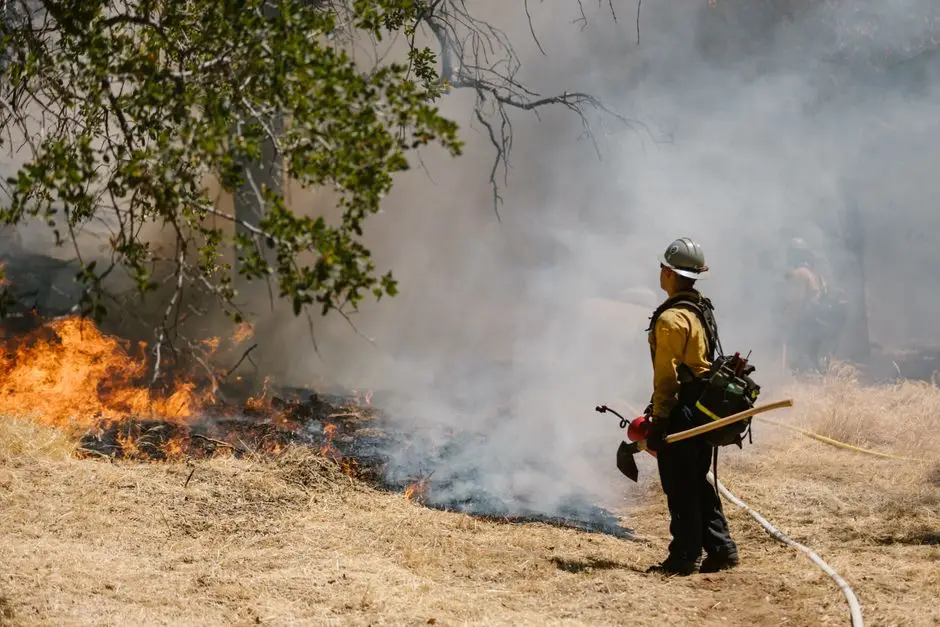
Preparing your Venice home for wildfire season means creating 100 feet of defensible space, clearing brush to city and county requirements, hardening the house against embers, and having a go-kit and evacuation plan ready before the first red flag warning. Wildfire season in Venice, California runs roughly May through October, with the worst risk in late fall when Santa Ana winds arrive. This guide walks through each step the way we handle it on real properties, from the canals to East of Lincoln.
Wildfire preparedness in VENICE California is not the same as it is in the hills. We have dense lots, mature palms, wooden fences, and salt air that dries out vegetation fast. The good news: most of the work is repeatable, and you can do a lot of it yourself over a weekend.
When is wildfire season in Venice, California?
Wildfire season in Venice, California runs from May through October, but the highest-risk window is September through November when Santa Ana winds push dry air from the inland deserts toward the coast. Those winds can hit 40 to 60 mph and carry embers a mile or more ahead of a fire front. In November 2026, we are right at the tail end of that window, which makes this the right month to fix what last season exposed.
Venice sits in a coastal zone, so the marine layer helps some mornings. Do not count on it. We have seen palm fronds and dry hedge rows ignite from embers that traveled over the marina. The Los Angeles County Fire Department maps Venice into a Very High Fire Hazard Severity Zone in parts of the community, and that designation drives brush clearance requirements.
Two other local factors matter. First, the Santa Ana winds dry out ornamental plants in 24 to 48 hours. Second, Venice has a lot of older bungalows and duplexes with wood siding, wood decks, and single-pane windows, all of which are more vulnerable to ember intrusion than newer construction.
What defensible space means on a Venice lot
Defensible space in Venice, California is the managed zone between your house and the vegetation, fences, and stored materials around it, designed to slow fire and give firefighters room to work. The standard is 100 feet of defensible space, split into three zones. On a typical Venice lot of 40 to 50 feet wide, you will not get 100 feet in every direction. You work with what you have and prioritize the side the wind comes from.
Zone 0: the first 5 feet
This is the ember-resistant zone. Remove anything that can burn within 5 feet of the foundation: wood mulch, firewood, cardboard boxes, plastic storage bins, brooms, and dead leaves in the crawlspace vents. Replace wood mulch with gravel or crushed rock. Keep the area under decks clear. This zone matters more than any other because embers land here first.
Zone 1: 5 to 30 feet
Keep grass mowed to 4 inches or less. Trim tree branches up to 6 feet from the ground. Separate shrubs so they do not form a continuous fuel ladder. Move propane tanks and fuel cans at least 30 feet from the structure, or store them in a fire-rated cabinet. On Venice lots, this zone often includes the side yard and the alley-facing strip, which is where a lot of homeowners forget to look.
Zone 2: 30 to 100 feet
Thin trees so canopies are at least 10 feet apart. Remove dead branches and piles of cuttings. Keep any vegetation near the property line trimmed back. If your lot backs up to a shared alley or a neighboring parcel, coordinate with the neighbor. Fire does not stop at a fence line.
If you are in a condo or apartment building, defensible space is a shared responsibility. We handle plenty of apartment fire cleanup VENICE California work where a single neglected hedge row or a wood fence against the building turned a small exterior fire into a full interior loss.
Brush clearance rules and how often to clear
Brush clearance in Venice, California is required annually, and the Los Angeles County Fire Department inspects properties in high-hazard zones between April and June. The core requirements: maintain 100 feet of clearance, remove dead vegetation, keep grass under 4 inches, trim tree limbs to 6 feet above the ground, and remove combustible material from roofs and gutters.
Clear brush twice a year in Venice: once in early spring before the May 1 inspection window, and again in late summer or early fall before the Santa Ana winds arrive. If you live near the canals, the Ballona Wetlands edge, or any lot with heavy ornamental planting, add a third pass in October. Dry palm fronds and eucalyptus litter accumulate fast.
- Mow grass to 4 inches or less; do not let it go to seed.
- Remove dead palm fronds from the ground and from the tree skirt.
- Keep roofs and gutters free of leaves and needles.
- Clear vegetation 5 feet back from any wood fence or deck.
- Do not stack firewood against the house or under a deck.
Fines for non-compliance in Los Angeles County can run several hundred dollars, and the county can perform the clearance and bill you. More importantly, a non-compliant property is harder to insure and harder to defend. We see the consequences in our fire debris removal VENICE California work: the properties that had clearance done are the ones where the fire stayed outside.
Home hardening against wildfires in Venice, California
Home hardening against wildfires in Venice, California means upgrading the building envelope so embers cannot find a way in. Most home losses in coastal fires start with embers, not a wall of flame. Embers get into attic vents, under roof tiles, into crawlspaces, and through gaps around garage doors.
Start with the roof. Class A roofing assemblies (asphalt shingle, tile, or metal) are the standard. If your roof is wood shake, plan to replace it. Next, screen every vent with 1/8-inch or smaller metal mesh. That includes attic vents, foundation vents, and dryer vents. Replace plastic vent covers with metal.
Windows are the next weak point. Tempered glass in dual-pane assemblies resists radiant heat better than single-pane. At minimum, make sure every window closes tightly and the frames are in good repair. Seal gaps around doors, windows, and utility penetrations with fire-rated caulk.
Decks and fences: replace the first 5 feet of any wood fence attached to the house with a non-combustible material, or separate the fence from the structure with a metal gate. Keep the underside of decks clear and enclose them with 1/8-inch mesh if possible.
We handle fire structural repair VENICE California on homes where a single ember entry point through a vent led to a full attic fire. Hardening is cheaper than rebuilding. Typical 2026 pricing for vent screening and gap sealing on a 1,200-square-foot Venice bungalow runs $600 to $1,800 depending on access and the number of penetrations.
Build an emergency wildfire kit for Venice
An emergency wildfire kit in Venice should cover at least 72 hours of self-sufficiency and be light enough to carry. Build two: a go-bag for the car and a stay-bin for the house. Keep the go-bag by the front door during red flag warnings.
The go-bag should include: N95 masks (smoke is the immediate health threat), a battery-powered radio, a flashlight, a phone charger and power bank, a 3-day supply of medications, copies of insurance and ID documents in a waterproof bag, cash in small bills, a change of clothes, and a first-aid kit. Add pet food and a leash if you have animals.
The stay-bin should include: 1 gallon of water per person per day for 3 days, non-perishable food, a manual can opener, a fire extinguisher rated ABC, work gloves, and a hose nozzle. Keep a 100-foot garden hose connected and ready on the side of the house the wind hits first.
Store documents digitally as well. Photograph every room, closet, and drawer before a fire happens. That photo record is what makes an insurance claim go smoothly. Our smoke damage cleanup VENICE California crews see claims stall for weeks when homeowners cannot prove what was in a room.
Wildfire evacuation checklist for Venice
A wildfire evacuation checklist for Venice should be practiced before you need it, because the roads out of Venice narrow quickly. Know two routes: one via Lincoln Boulevard and one via Abbot Kinney or Venice Boulevard toward the 405. During a red flag warning, keep the car facing out of the driveway and the tank at least half full.
- Leave early. Do not wait for an evacuation order if you smell smoke or see ash.
- Close all windows and doors, and leave interior doors open so firefighters can move through.
- Shut off gas at the meter only if instructed by officials.
- Turn on exterior lights so the house is visible in smoke.
- Take the go-bag, medications, pets, and documents. Leave everything else.
- Check on neighbors, especially older residents and anyone without a car.
Venice has a large renter population, and renters often do not know what their landlord is responsible for. If you rent, read your lease and keep renters insurance active. Our tenant fire damage cleanup VENICE California team works with both renters and owners to sort out who pays for what after a loss.
Wildfire insurance preparation in Venice
Wildfire insurance preparation in Venice means reviewing your policy before a loss, not after. Standard homeowners policies in California typically cover wildfire damage to the structure and contents, but the details matter: replacement cost versus actual cash value, extended replacement cost, and whether your policy includes debris removal and additional living expenses.
Do three things this month. First, confirm your dwelling coverage limit matches current rebuild costs in Venice, which in 2026 run roughly $350 to $500 per square foot for a mid-grade rebuild. Second, check that your policy includes at least 10% extended replacement cost. Third, ask specifically about debris removal limits, because clearing a burned lot can cost $15,000 to $40,000.
Keep a current home inventory with photos and receipts. Store it in the cloud and with a trusted contact outside the area. If your insurer has a wildfire mitigation discount, ask what documentation they need for home hardening credits.
Common mistakes to watch out for
The most common mistake we see is clearing brush once in the spring and calling it done. By September, the same lot has dry grass and palm litter again. Clear twice, and inspect after every wind event.
Second mistake: focusing on the big vegetation and ignoring the small stuff. Embers do not need a tree. They will find a doormat, a wood planter, a stack of cardboard, or a broom leaning against the siding.
Third: assuming the marine layer protects Venice. It does not. The 2026 fire season has already shown how fast coastal neighborhoods can be affected by smoke and ember cast.
Fourth: waiting to evacuate. People die in wildfires because they wait for a knock on the door. If you are in a high-hazard zone and a red flag warning is issued, be ready to leave before the order comes.
Fifth: not documenting before the loss. Photos and receipts are the difference between a smooth claim and a fight.
When to call a professional
Call a professional when the work involves heights, the roof, electrical penetrations, or anything you cannot safely reach. Vent screening, roof repairs, and structural hardening are not DIY jobs on a two-story Venice home. Call us too if you have had a small fire, smoke event, or ember intrusion and are not sure whether the damage is contained.
We handle fire damage cleanup Downtown Venice and across the Westside, from board-up and soot removal to full structural repair. If you are not sure whether you need help, call and describe what you see. We will tell you honestly whether it is a cleanup or a repair.
Frequently Asked Questions
How do I prepare my Venice home for wildfire season in California?
Create 100 feet of defensible space, clear brush to county requirements, screen all vents with 1/8-inch mesh, seal gaps around doors and windows, build a 72-hour go-kit, and confirm your insurance coverage. Do the brush clearance twice a year, in spring and late summer.
What is defensible space in Venice, California?
Defensible space is the managed zone around your home where vegetation, debris, and combustible materials are reduced or removed to slow fire spread. The standard is 100 feet, split into a 5-foot ember-resistant zone, a 5-to-30-foot zone, and a 30-to-100-foot zone.
When is wildfire season in Venice, California?
Wildfire season in Venice runs May through October, with the highest risk from September through November when Santa Ana winds bring dry air and high gusts. Brush clearance inspections typically happen between April and June.
Does homeowners insurance cover wildfire damage in Venice, California?
Standard homeowners policies in California usually cover wildfire damage to the structure and contents. Check your dwelling limit, extended replacement cost percentage, debris removal limit, and additional living expense coverage before a loss occurs.
How often should I clear brush in Venice, California?
Clear brush at least twice a year: once in early spring before the May 1 inspection window and again in late summer or early fall before Santa Ana winds arrive. Properties with heavy palm or eucalyptus litter may need a third pass in October.
Get help with Fire Damage Restoration in VENICE
If a fire, smoke event, or ember intrusion has already touched your property, we can assess the damage and give you a clear scope the same day. Fire Damage Restoration Venice serves homeowners, renters, and landlords across Venice and the Westside.
Call (833) 929-6186 to speak with our team.